January Is Out to Get Your Vape: A Cold-Weather Field Manual

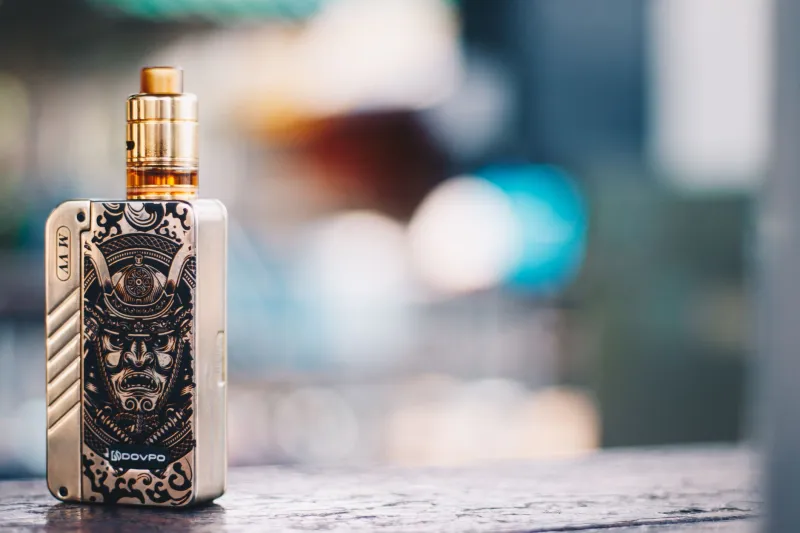
Photo: Ridiculopathy, CC0, via Wikimedia Commons
If you live anywhere north of the Mason-Dixon line, you already know the drill: the first real cold snap hits, and suddenly your mod feels weak, your flavor goes muted, and every car ride turns into a scene from a haunted house movie. Winter doesn't just make vaping less pleasant — it changes the physics of the whole experience. Here's what's going on and how to work around it.
Your Battery Is Not Broken, It's Just Cold
Lithium-ion cells are fair-weather friends. When temperatures dip below freezing, the chemical reactions inside your battery slow way down, which means reduced capacity and saggy voltage readings. A mod that reads 100% indoors might drop two bars after ten minutes in a Chicago parking lot.
The fix is mostly about habits:
- Keep your device inside your coat pocket, not clipped to the outside or tossed in a cold bag.
- Never leave your mod in the car overnight. Cold drains batteries and repeated freeze-thaw cycles degrade them permanently.
- Warm up before you judge. Let the device sit at room temp for 15–20 minutes before assuming your battery is dying. It's probably just chilly.
One important safety note: never charge a cold battery. Bring it inside, let it normalize, then charge. Charging below freezing can cause lithium plating, which permanently damages the cell.
Your E-Liquid Just Turned Into Maple Syrup
VG — the vegetable glycerin that makes your clouds big — thickens dramatically in the cold. High-VG juices can get genuinely sluggish below 40°F, which means slower wicking, dry hits, and burnt coils even when the coil is fine.
A few workarounds that actually help:
- Drop your VG ratio in winter. If you're normally a 70/30 person, a 60/40 or even 50/50 blend wicks better in cold weather and still tastes great.
- Store your juice indoors, not in the car or garage. A bottle that's gone cloudy from the cold will usually clear up at room temp — that's just crystallization, not spoilage.
- Take slower, shorter puffs to give the wick time to keep up.
The Car Problem: Vaping Without Fogging Every Window
Ah, the classic winter dilemma. You're stuck in traffic on I-94, you want a hit, and thirty seconds later you can't see the brake lights in front of you.
The fog isn't mysterious — it's condensation. Vapor is water-heavy, and in a cold car, it condenses on the glass instantly. Your options:
- Crack a window. Even an inch of airflow gives the vapor somewhere to go. Yes, it's cold. That's the trade.
- Run the defroster on fresh air, not recirculate. Recirculating keeps the humidity in the cabin, which makes everything worse.
- Exhale down and toward the window crack, not up toward the glass.
- Switch to a high-PG, low-vapor juice for car rides. Less cloud, less fog, same nicotine satisfaction.
And a friendly reminder: a vape in a cold car is a battery in a cold car. Bring it inside with you.
Outdoor Vaping Without Freezing Your Face Off
There's a special kind of misery in stepping outside a bar in Minneapolis in February for a quick hit and feeling the vapor freeze in your throat. Cold air plus warm vapor equals a harsh, cough-inducing pull every time.
Lower your wattage a notch, take a smaller first puff to let the coil warm, and consider a warmer-flavored juice — dessert and tobacco profiles hit differently when it's 15°F out than they do in July.
Winter-Proof Your Kit Before the Next Storm
A little prep goes a long way:
- Swap in a fresh coil before the season, since old wicks struggle even more in the cold.
- Carry a backup charged battery if you're out all day.
- Keep a small juice bottle in an inside pocket so it doesn't thicken up.
Winter vaping takes a little more intention, but it's entirely doable. Treat your gear like you'd treat your phone in the cold — keep it warm, keep it charged, and don't push it when it's shivering. Spring will be here eventually. Until then, vape smart and stay warm.